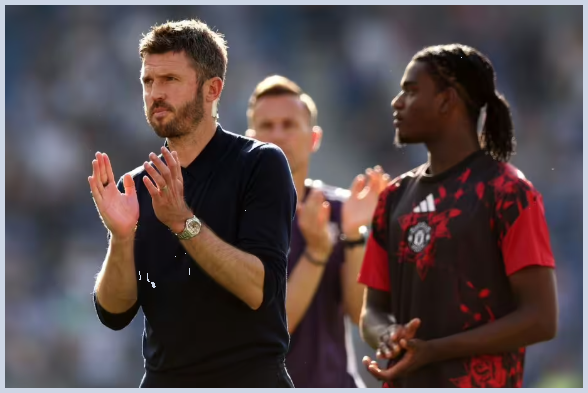
Is Michael Carrick Keen on Transforming Manchester United
Michael Carrick has made it clear that a new chapter has begun at Manchester United. After securing the managerial position on a permanent basis, the former midfielder has wasted no time introducing sweeping changes designed to modernize the club's culture and improve performances both on and off the pitch.
Carrick earned the job following an impressive spell as interim manager, guiding United to 12 wins, four draws and only two defeats after taking charge in January. His strong start lifted the Red Devils into third place in the Premier League, ensuring qualification for the UEFA Champions League.
With his position secured, Carrick has started reshaping daily life at Old Trafford by removing several long-standing policies introduced by his predecessors.
A New Recovery Schedule
One of Carrick's first changes involved the team's post-match routine.
Under former managers Ruben Amorim and Erik ten Hag, players were required to report back to the training ground the day after every match for recovery work.
Carrick has opted for a different approach.
Instead of immediate recovery sessions, players are now given a designated rest day within 24 hours of a fixture. Recovery activities are postponed until two days after matches, allowing the squad additional time to recover physically and mentally.
The change reflects Carrick's belief that proper rest can be just as valuable as structured recovery sessions.
Relaxing the Dressing Room Atmosphere
Another notable adjustment concerns life inside the dressing room.
Previously, food was not allowed inside the changing area as part of strict fitness standards introduced under Amorim.
Carrick has reversed that decision, believing a more welcoming environment can help strengthen team unity.
Players are now permitted to eat in the dressing room, helping create a more relaxed atmosphere where teammates can socialize before and after matches.
Improved Communication After Matches
Carrick has also changed how players and coaches interact after games.
Instead of allowing players to leave immediately, every member of the squad now remains together until the coaching staff has spoken with them.
The goal is to ensure every player feels respected and fully informed following each match.
Captain Harry Maguire has reportedly become one of the strongest voices in these discussions, helping create a more open and supportive environment within the squad.
A Different Matchday Routine
Carrick has refreshed another long-standing tradition by slightly delaying the team's arrival at Old Trafford on matchdays.
The adjustment was first noticeable before United's victory over Manchester City, when the team bus arrived around 15 minutes later than usual.
Rather than spending extended periods waiting inside the stadium, players now arrive closer to kick-off, helping maintain focus while also allowing supporters to create a louder atmosphere as the team enters the ground.
Higher Intensity on the Training Pitch
Training sessions have also undergone a significant transformation.
Where previous regimes often emphasized lengthy tactical drills, Carrick has shortened the duration of training while increasing the intensity.
The objective is simple: demand maximum effort throughout every session.
Reports suggest the quicker pace has improved energy levels, sharpened competition for places and created a more positive mood among the players.
Giving Coaches a Bigger Voice
Carrick has encouraged a more collaborative coaching environment.
Unlike previous setups where assistant coaches had limited involvement during sessions, Carrick has empowered his backroom staff to play a more active role.
Steve Holland and Jonathan Woodgate are now heavily involved in delivering tactical instructions and working closely with players during training.
The increased interaction has reportedly been welcomed by the squad, providing players with more individual guidance and varied coaching perspectives.
Tactical Flexibility Returns
Perhaps the biggest footballing change has come in United's tactical setup.
Under Amorim, the team consistently operated with a 3-4-3 formation, regardless of injuries or player suitability.
Carrick has abandoned that rigid approach in favor of a more balanced 4-2-3-1 system.
The formation better suits several members of the current squad, particularly academy graduate Kobbie Mainoo, who has returned to a prominent role after previously struggling for opportunities.
The tactical shift has improved the team's defensive stability while creating greater freedom for attacking players to express themselves.
A Different Approach to Pre-Season
Carrick has even altered the club's pre-season preparations.
Instead of embarking on another long-distance commercial tour across the United States or Asia, Manchester United will remain closer to Europe ahead of the new campaign.
The club is scheduled to play matches in Norway, Finland, Ireland and Sweden against strong opposition, including Paris Saint-Germain, Leeds United, Atlético Madrid, Rosenborg and Wrexham.
Keeping travel to a minimum is expected to reduce fatigue and provide players with better preparation before the new season begins.
A New Era at Old Trafford?
While changing rules alone will not guarantee success, Carrick's early decisions point toward a clear vision for the future.
His focus on player welfare, improved communication, tactical flexibility and a positive dressing-room culture suggests he is determined to build a team capable of competing consistently at the highest level.
Whether these changes ultimately translate into silverware remains to be seen, but one thing is already evident: Michael Carrick is determined to leave his own mark on Manchester United, creating an environment built on trust, intensity and togetherness rather than rigid routines.

💬 Comments (0)
No comments yet. Be the first!
Leave a Comment