Football matches are not always decided by beautiful passing moves, long spells of possession or individual brilliance. Sometimes, the most important moment comes from a corner kick, a carefully delivered free kick or a penalty awarded under pressure. These situations may last only a few seconds, but they can completely change the direction of a match.
This is why set-piece performance deserves serious attention when analysing football teams. A side might struggle to break down a well-organised defence during open play but still find a way to score through a perfectly executed corner. Similarly, a team that fails to defend free kicks properly can throw away valuable points despite performing well for most of the game.
Understanding how teams attack and defend set pieces provides useful information about their strengths, weaknesses and ability to handle important match situations.
How Set-Piece Performance Influences Football Results
1. Set Pieces Create Scoring Opportunities When Open Play Becomes Difficult
One of the biggest advantages of set pieces is that they offer teams another route to goal when their normal attacking approach is not working.
Against opponents who defend deep and maintain a compact defensive structure, creating clear opportunities through open play can be difficult. Passing lanes become limited, attacking players struggle to find space, and even teams with talented forwards can become frustrated.
Set pieces provide an alternative. A corner kick allows attackers to position themselves inside the penalty area and target specific spaces. A free kick gives technically gifted players an opportunity to shoot directly or deliver the ball into dangerous areas.
These situations can become particularly important when both teams are evenly matched and neither can create many clear chances during normal play. A well-rehearsed set-piece routine may provide the breakthrough that ordinary attacking movements cannot deliver.
2. Corner Kicks Can Give Teams an Important Scoring Advantage
Corner kicks are among the most common attacking set pieces in football. They offer opportunities to use aerial strength, intelligent movement and accurate delivery to create dangerous situations.
Teams with tall centre-backs, physically strong forwards and players who are comfortable attacking crosses can become particularly threatening from corners. However, height alone does not guarantee success. Good corner routines also depend on timing, positioning and coordination.
Some teams use near-post runs to create flick-ons, while others target the far post or place players around the goalkeeper to disrupt defensive organisation.
A club that consistently creates shots and goals from corners has an additional attacking weapon. This can make it difficult for opponents to defend against them, especially when the team also possesses a strong open-play attack.
When studying football set-piece statistics, it is therefore useful to examine not just the number of corners won but how effectively teams turn them into scoring opportunities.
3. Free Kicks Can Change Matches Through Accuracy and Creativity
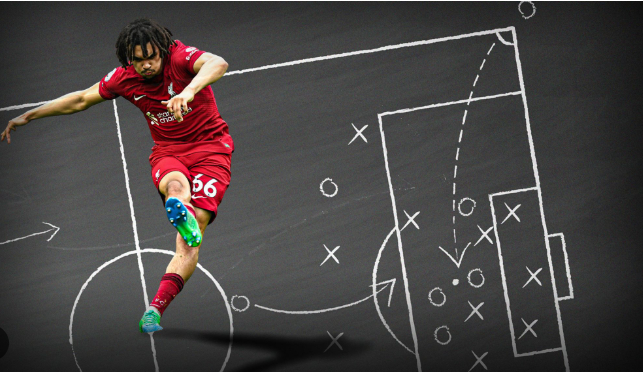
Free kicks provide another opportunity for teams to influence the scoreline without needing to build an attack from the back. A player with excellent technique can score directly from a dangerous position, while an accurate delivery into the penalty area can create problems for defenders.
The most dangerous free kicks often involve more than individual ability. Players must understand where to position themselves, when to make their runs and how to exploit spaces in the defensive wall or penalty area.
Some teams use rehearsed movements to confuse opponents, while others depend on the quality of a specialist who can deliver the ball into difficult areas. This becomes particularly valuable in tight matches where chances from open play are limited. A single well-executed free kick can turn a disappointing performance into a memorable victory.
4. Penalties Can Have a Major Psychological Impact
Penalties are perhaps the most direct scoring opportunities available through set-piece situations.
Unlike open-play attempts, a penalty gives the taker a clear opportunity to score without having to beat several defenders. Nevertheless, the pressure can be enormous, particularly when the result is important.
A successful penalty can give a team confidence, change its tactical approach and put the opposition under pressure. Missing one can have the opposite effect. Players may become frustrated, supporters can grow anxious, and the opposing team may gain renewed belief.
Penalty performance is therefore influenced by both technical ability and mental preparation.
When evaluating a team's set-piece strength, it is worth considering its penalty takers, previous conversion record and ability to handle pressure in important situations.
5. Defensive Set-Piece Organisation Can Protect Valuable Points
Attacking set pieces receive plenty of attention, but defending them is equally important. A team can dominate possession and create several scoring opportunities but still lose because it repeatedly struggles to defend corners and free kicks.
Poor marking, confusion between defenders and goalkeepers, weak aerial challenges and slow reactions can all create opportunities for opponents. Good defensive organisation requires clear communication and an understanding of individual responsibilities.
Some teams use zonal marking, where defenders protect specific areas, while others prefer man-marking, where players follow designated opponents. Certain clubs combine both approaches. The important thing is ensuring that defenders know their responsibilities and react quickly when the ball enters dangerous areas.
Set-piece defending can be the difference between securing a clean sheet and conceding a costly goal.
6. Set-Piece Specialists Can Give Teams an Extra Advantage
Not every footballer delivers the same quality from dead-ball situations. Some players possess exceptional crossing ability, while others are particularly skilled at striking direct free kicks. Having reliable set-piece specialists can give a team an important advantage.
An accurate corner taker can consistently place the ball where attacking teammates can challenge for it. A player with excellent free-kick technique can force opponents to defend carefully around the penalty area.
This also creates tactical possibilities for the manager. Opponents may become reluctant to commit unnecessary fouls near their box or allow certain players too much space around the wings.
When analysing a fixture, checking the availability of a team's main set-piece takers can therefore provide useful information. Their absence through injury or suspension may affect the quality of the team's deliveries.
7. Set Pieces Become More Important in Closely Contested Matches
Some football matches are decided by very small margins. Both teams may defend well, limit shooting opportunities and struggle to create space in the final third.
In these circumstances, set pieces can become particularly influential. A corner, free kick or penalty might be the only clear opportunity either side creates throughout the match. This is especially noticeable in knockout competitions, local derbies and important league fixtures where teams are unwilling to take unnecessary risks.
A club with strong set-piece routines may have an advantage because it can create scoring opportunities without depending entirely on open-play creativity. However, the pressure works both ways. Teams that defend these situations poorly can find themselves punished even when their overall performance has been impressive.
8. How Set-Piece Statistics Can Improve Football Match Analysis
Set-piece performance provides useful information when comparing teams before a fixture. Instead of looking only at goals scored and conceded, consider how many goals each side scores from corners, free kicks and penalties.
Also examine the number of set-piece opportunities created, shots produced from those situations and goals conceded through defensive mistakes. Recent performances can be particularly revealing. A team that has conceded several goals from corners in its last few matches may have a defensive weakness worth investigating.
Similarly, a club that regularly creates dangerous opportunities from free kicks could pose a threat against an opponent that struggles to defend crosses. However, these statistics should be considered alongside injuries, player availability, tactical changes and the quality of recent opponents.
No single set-piece statistic guarantees a particular result. The aim is to understand how these situations contribute to a team's overall performance.
Conclusion
Set pieces may occupy only a small portion of a football match, but their influence can be enormous. A perfectly delivered corner, an accurate free kick or a confidently converted penalty can completely change the outcome of a contest.
Strong set-piece performance gives teams another way to score when open-play opportunities are limited, while effective defensive organisation helps prevent unnecessary goals.
For anyone analysing football matches, looking beyond possession and total shots is important. Sometimes, the difference between winning, drawing and losing is determined by how well a team handles those few decisive moments when the ball is stationary.