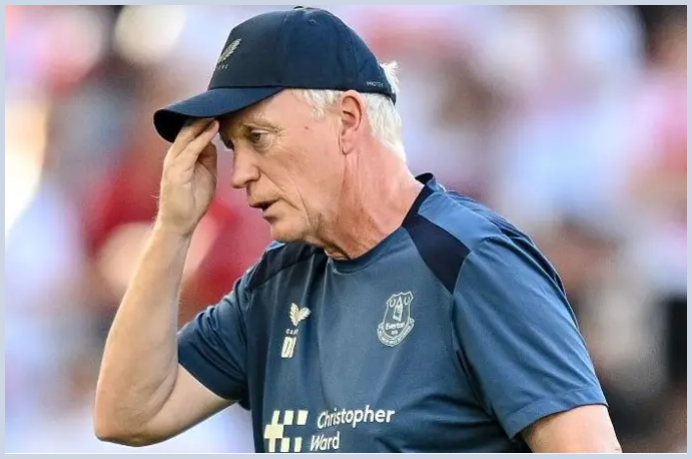
Do David Moyes and Everton's Owners Share the Same Ambition?
Tension has surfaced between David Moyes and Everton's American owners, The Friedkin Group (TFG), after chief executive Angus Kinnear described last season's failure to qualify for European football as outright "failure", a label that clearly surprised the manager. With the transfer window closing soon and key areas of the squad still unresolved, the question now is whether Moyes and TFG can align on ambition, recruitment and priorities for the campaign ahead.
Conflicting narratives on ambition and "failure"
The divergence became public when Kinnear told BBC Radio Merseyside that TFG viewed missing out on Europe as a failure because, in his words, "it was a failure". "The Friedkins are winners. They want to win and we didn't win anything," he said, adding that the board had discussed using the Carabao Cup and FA Cup to give supporters something tangible to rally behind.
Moyes' reaction suggested he had not been given the same marching orders. "I'm surprised they were disappointed because there was never, ever any time anyone said to me, 'David, you have to make Europe or you have to be in and around the top end'," he replied. He argued that the primary objective last season was to stabilise the club during the move into the new stadium and avoid a difficult campaign, a goal he believes was achieved.
Former Everton midfielder Leon Osman told BBC Sport that the timing and tone of the ownership's statement were unexpected, especially given how often the club has been fighting simply to stay in the Premier League in recent years. He framed the late-season collapse as a "disappointment rather than a failure", noting that clubs like Brighton and Bournemouth reached Europe only after years of steady building.
Cup priorities versus Premier League survival
The disconnect also extends to the importance of domestic cups. Kinnear has spoken about leveraging the Carabao Cup and FA Cup to create excitement, but Moyes bristled when quizzed on the topic, at one point asking whether journalists were "dead stupid" for suggesting cup success could outweigh league security. He later clarified that while everyone wants to win trophies, the fundamental question remains: "Is winning a cup more important than staying in the Premier League?"
This exchange underlines a delicate balancing act for Moyes: satisfying ownership's desire for progress and silverware while protecting the club's core objective of Premier League stability.
Transfer activity: solid groundwork, but Moyes wants more
On the recruitment front, Everton have been busy. The club has secured Hayden Hackney from Middlesbrough (the PFA Championship Player of the Year), brought in experienced Danish midfielder Christian Nørgaard from Arsenal, and confirmed permanent deals for Merlin Rohl and Tyrique George after their loans. Brennan Johnson arrived from Crystal Palace in a straight swap with Dwight McNeil, adding pace and directness to the attack.
Yet Moyes insists this is not enough. "For us to be a side which is competitive, I still think we have got a lot of work to do," he said. "We need more players. Our squad is not big enough and we need to get more quality in some areas if we can do." He acknowledged financial constraints but made clear he wants additional backing before the transfer window shuts.
The right-back dilemma: Moyes' top target and the alternatives
The most glaring gap remains at right-back, a position that has become a flashpoint among supporters. Moyes' preferred option is understood to be Strasbourg's Guela Doue, but the price is seen as prohibitive. Other names considered include Ridle Baku (RB Leipzig) and Crystal Palace's Daniel Munoz, while moves for Alistair Johnston (Celtic) stalled due to injury and Timothy Castagne was ruled out by Fulham. Aaron Wan-Bissaka was also on the list before he joined Aston Villa on loan from West Ham.
Until a deal is done, this weakness will continue to dominate conversation around Everton's squad planning.
Squad depth, expectations and the pressure on TFG
There is recognition that TFG has restored financial stability after the turbulent Farhad Moshiri era and has invested around £170m in players since taking over. Osman praised much of the summer's business but cautioned that rebuilding takes multiple windows, especially from Everton's starting point. "It takes five or six transfer windows minimum to get there depending on your starting point," he said, adding that noise will continue until a right-back, and possibly a new number nine, are signed.
Moyes, in the final year of his contract, is acutely aware that he absorbed significant criticism when Europe slipped away last season. He now wants TFG to demonstrate its ambition by backing him in the market and agreeing on targets that address the squad's clear deficiencies.
What the final days of the window will reveal
With Everton off to a promising start, including an opening Premier League win over Crystal Palace and a convincing Carabao Cup victory at Preston North End, the immediate mood is positive. But the real test of alignment between Moyes and TFG will come in the next few days: can they agree on a right-back, add further quality where needed, and present a united message on the club's short-term priorities?
For now, the messages remain mixed. Whether Moyes gets the reinforcements he says are necessary, and whether TFG's actions match its stated desire to win, will define the narrative as the transfer deadline approaches.

💬 Comments (0)
No comments yet. Be the first!
Leave a Comment