In-Play Football Betting: How to Assess Live Markets Responsibly
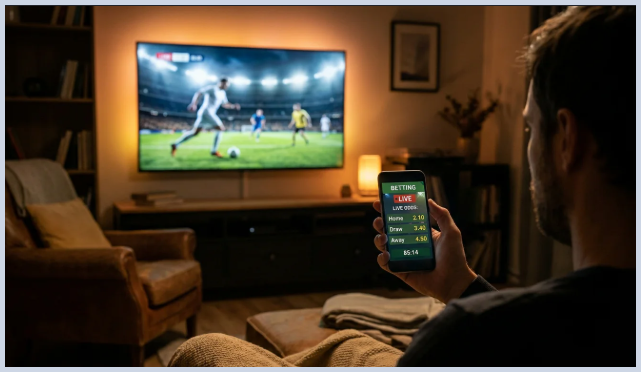
In-play football betting allows you to place wagers after a match has started. Instead of relying only on pre-match information, you can assess the score, tempo, tactics, chances and player performance before deciding whether a live market offers value.
However, speed does not automatically create an advantage. Live betting is fast-moving, emotionally intense and exposed to delays, changing odds and sudden match events. The best approach combines live football analysis, disciplined bankroll management and realistic expectations.
How live football betting works
Traditional football betting takes place before kick-off. Once the match begins, the pre-match price is no longer based on a fixed situation. A goal, red card, injury, substitution or tactical change can alter the likely outcome within seconds.
In-play betting, also called live or in-running betting, updates prices as the match develops. Bookmakers and betting exchanges assess factors such as:
- The current score.
- Time remaining.
- Possession and territory.
- Shots and chances created.
- Set pieces and corners.
- Red and yellow cards.
- Injuries and substitutions.
- Tactical changes.
- The strength of each team before kick-off.
Odds are calculated using automated models and live data feeds. These prices can move quickly because the probability of an outcome changes as the match state changes.
Markets may also be suspended after goals, penalties, red cards and VAR reviews while the operator confirms the event and recalculates the odds.
Why live markets attract bettors
The main appeal of live betting is the additional information available after kick-off. Before a match, bettors must estimate how teams will perform. During the game, they can see whether the pre-match expectations are being confirmed or challenged.
For example, a team may be a strong favourite before kick-off but produce very little attacking threat. Another side may have less possession but create the clearer chances. That information could influence markets such as match result, goals, corners or cards.
Live betting can therefore be useful for people who watch matches closely and understand tactical changes. But it also carries extra risks because decisions must often be made quickly, with limited time to review the price and potential outcome.
Popular in-play football markets
The best market depends on the match, available information and your personal strategy. No market guarantees profit, and a price that looks attractive may already reflect what has happened on the pitch.
Next team to score
The next team to score market focuses on the next goal rather than the final result. It can be easier to analyse than a full-time prediction because the question is narrower.
Relevant factors include:
- Which team is creating the better chances.
- Whether one side is defending deep.
- The number of attacking players on the pitch.
- Whether a team is pressing after conceding.
- The quality of recent shots and opportunities.
- Fatigue during the final stages.
A strong favourite may dominate possession but still offer poor value if the odds are too short. Always compare the price with your assessment rather than assuming that the stronger team must be the better bet.
Live over and under goals
The in-play goals market changes as time passes. As fewer minutes remain, the probability of additional goals generally changes, and bookmakers adjust lines such as over or under 1.5, 2.5 or 3.5 goals.
A 0-0 score does not automatically mean that an over-goals bet is attractive. Look at the quality of the match:
- Are teams creating clear chances or only taking low-quality shots?
- Are attacks reaching the penalty area?
- Are defenders making errors?
- Has the game become more open after a substitution?
- Is one team likely to settle for the result?
A match with several dangerous attacks may offer a different outlook from a game with many harmless attempts from outside the box.
Corners
Live corner betting can become relevant when a team is chasing an equaliser or winner. Losing sides may attack through the wings, send more crosses into the area and force defenders to clear the ball behind.
Before considering a corners market, assess:
- The number of corners already taken.
- Which team is applying pressure.
- Whether attacks are coming through wide areas.
- The number of blocked shots and defensive clearances.
- The scoreline and time remaining.
- Whether the leading team is defending deep.
A late surge does not guarantee more corners, so the match pattern must support the prediction.
Cards and bookings
Cards markets may be influenced by the referee’s approach, the intensity of the fixture and the tactical situation. A side defending a narrow lead may commit more fouls, while a team chasing the game may make tactical challenges to stop counter-attacks.
Consider the referee’s previous tendencies, but do not rely on historical averages alone. The match context, rivalry, player behaviour and scoreline can be more important than pre-match statistics.
Timing a live bet
Entering the market at the right time is important, but waiting can be just as valuable as acting quickly. Prices may change after a dangerous attack, injury or tactical adjustment.
Avoid betting simply because an event has just occurred. A goal, red card or missed penalty may already be reflected in the new price by the time the market reopens.
Before placing a wager, check:
- The latest score and match time.
- Whether the odds have changed since you opened the market.
- The number of players on each team.
- Whether the market is suspended or awaiting confirmation.
- The terms for accepted, rejected or adjusted odds.
- Whether your prediction still represents reasonable value.
You should never assume that a bet has been accepted until the platform confirms it.
VAR and suspended markets
VAR has made live betting more complex. When a goal, penalty or red card is being reviewed, operators may pause related markets. This prevents bets from being accepted at prices that no longer reflect the likely outcome.
A suspended market does not indicate that a particular result will be confirmed. It simply means that the operator is waiting for reliable information before recalculating the odds.
Do not attempt to exploit a delayed screen or live-data gap. The information reaching your device may not arrive at the same time as the official data used by the operator. Betting regulators require licensed operators to manage the fairness and integrity risks connected with in-play markets.
Hedging and cash-out decisions
Hedging involves placing another bet that reduces exposure to the original position. Suppose you backed Team A before kick-off and they lead 1-0 late in the match. If Team B has begun creating dangerous chances, you may consider whether covering the draw or another opposing outcome is appropriate.
Hedging can reduce potential losses or lock in a profit, but it does not always create a guaranteed return. The available price, stake size, commission and market rules all matter.
Cash-out features should also be treated carefully. A cash-out offer may be lower than the theoretical value of the bet, and it can disappear when an important event occurs. Review the numbers and terms before accepting rather than clicking automatically under pressure.
Final thoughts
Successful in-play football betting requires more than fast reactions. It depends on understanding the match, assessing probability, comparing odds with your own view and controlling your stake size.
Focus on a small number of markets, wait for reliable information and accept that even a well-reasoned prediction can lose. The aim should be to make informed decisions within strict limits—not to force a profit from every match.


💬 Comments (0)
No comments yet. Be the first!
Leave a Comment