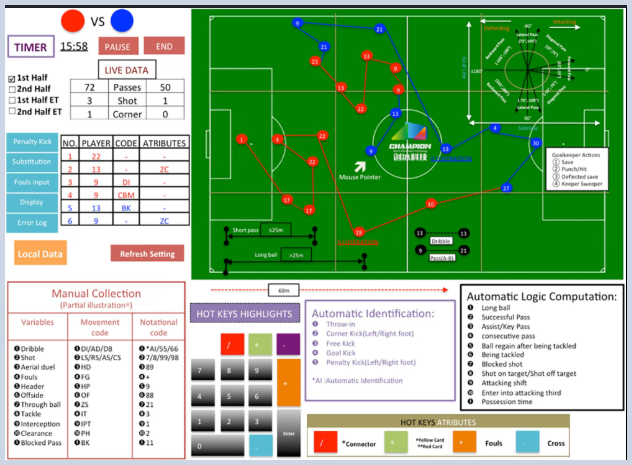
How Match Statistics Tell Stories Beyond the Scoreline
Football has always been a game of emotions. We celebrate dramatic winners in stoppage time, argue over controversial decisions, and remember scorelines for years. But if there’s one thing I’ve learned from following football closely, it’s that the numbers behind a match often reveal a completely different reality. That’s why today’s betting tips have evolved far beyond simply looking at results and league positions.
The final score tells us who won. Match statistics tell us why.
And sometimes, they tell us that the winning team may not actually have been the better side.
The Scoreline Can Be Deceptive
I remember watching a match a few seasons ago where a team won comfortably 3-0. Social media exploded with praise. Fans called it a dominant display and pundits spoke about a tactical masterclass.
Then I checked the numbers.
The losing team had more possession, created better chances, registered more shots inside the box, and recorded a higher expected goals (xG) total. Suddenly that 3-0 victory looked very different.
Football can be cruel and unpredictable. A goalkeeper can have the game of his life. A team can score from two deflections and a penalty. Strange things happen every weekend.
That’s why relying only on results can sometimes lead people in the wrong direction.
Statistics Reveal the Hidden Story
When we look deeper into football analytics, the game begins to unfold in a completely different way.
Statistics provide context. A team that lost 2-1 might actually be improving.
A side on a winning run could secretly be overperforming.
These hidden details matter for fans, analysts, and especially anyone interested in today’s betting tips.
Some statistics have become incredibly valuable because they uncover patterns invisible to the average viewer.
Expected Goals Changed Everything
If there is one statistic that transformed football discussions, it is expected goals (xG).
Years ago, many fans simply looked at shots. Ten shots versus five shots seemed straightforward. But not all chances are equal. A shot from 35 yards and a one-on-one opportunity inside the six-yard box count differently.
That’s where xG comes in.
It measures chance quality and estimates how likely a shot is to become a goal.
I’ve watched teams go unbeaten for weeks while consistently posting poor xG numbers. Eventually, reality caught up.
Luck fades. Patterns usually remain. That’s why football data analysis has become a major part of modern scouting and prediction models.
Possession Doesn't Always Mean Control
One of football’s biggest myths is that more possession automatically means dominance.
Not necessarily. I once watched a team finish with nearly 70% possession and lose comfortably.
Why? Because possession without purpose means very little. Many teams pass sideways endlessly but create almost nothing dangerous.
Meanwhile, opponents may sit deeper and strike quickly on the counterattack.
Looking at team performance analysis helps reveal whether possession actually translated into meaningful opportunities.
Statistics like:
· Progressive passes
· Key passes
· Final-third entries
· Big chances created
These often tell a much stronger story.
Shots On Target Reveal More Than Goal Totals
Goals alone rarely show the complete picture. Imagine two teams: One scores twice from two shots. Another creates eight dangerous attempts but somehow fails to score.
Who performed better?
The answer becomes clearer through shots on target, chance quality, and attacking efficiency.
Over a long season, teams creating stronger chances usually maintain consistency.
This is why bettors increasingly rely on sports betting insights rather than simply following headlines.
Why Smart Bettors Look Beyond Results
Anyone interested in betting strategy quickly learns that results can be misleading.
Bookmakers adjust prices based heavily on public perception. Public perception often reacts emotionally. Statistics react logically. That difference creates opportunities.
Imagine a team losing three straight matches. Most people immediately avoid them.
But deeper match analysis may show:
- Strong xG numbers
- Dominant possession
- Numerous big chances
- Unlucky finishing
That team could actually be close to a turnaround.
This is where smart analysis separates informed predictions from emotional guessing.
Football Is Becoming a Numbers Game
Modern football clubs now invest heavily in analysts and data departments.
Recruitment decisions increasingly involve advanced football metrics. Managers use statistics to identify tactical weaknesses. Scouts search for hidden talent using data profiles.
Fans are changing too. We no longer just watch football. We analyze it. And honestly, that makes the sport even more fascinating.
You begin noticing patterns and details you once ignored and start understanding why a team wins instead of simply seeing that they won.
Bottom Line
The beauty of football is that every match tells a story.
But scorelines often reveal only the final chapter. The real plot exists inside the numbers, hidden within chances created, movement, pressure, passing patterns, and tactical battles.
That’s why how match statistics tell stories beyond the scoreline is more than just a concept. It’s a new way of understanding football itself. The next time you watch a match, don’t rush straight to the result.
Look deeper. Because sometimes the statistics tell a far more interesting story than the scoreboard ever could.





💬 Comments (0)
No comments yet. Be the first!
Leave a Comment