Man Utd Possession Stats: Why United Win More With Less Ball Under Carrick
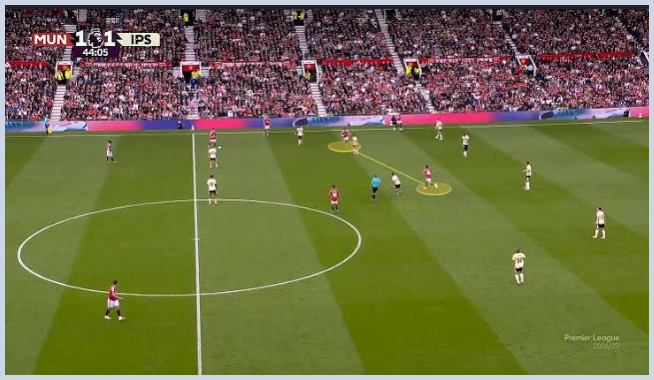
Manchester United's recent performances under Michael Carrick have revealed a striking paradox: the Red Devils are significantly more effective when they don't dominate possession. Statistical analysis shows United average just 1.5 points per game when holding over 50% of the ball, but that figure jumps to 2.6 points when they operate with less than half the possession. Even more remarkably, when their possession drops to 45% or below, United have won all 10 of their last 10 games since the start of last season.
The Counter-Attacking Conundrum
This pattern places Carrick at a familiar crossroads once faced by Ole Gunnar Solskjaer: how to evolve from an elite counter-attacking side into a team capable of breaking down opponents who willingly surrender the ball. Enzo Maresca's post-match comments after Manchester City's 1-0 derby defeat highlighted this dynamic perfectly. "They love transitions and space in behind," Maresca observed, noting how City's decision to drop deeper and deny United running room made the game considerably harder for the 10-man visitors.
United DNA vs Tactical Reality
The concept of "United DNA" remains central to discussions around the club's identity, with Carrick echoing Sir Alex Ferguson's belief that the team has a "duty to entertain." While Ruben Amorim previously attempted a more structured, risk-averse approach, Carrick has swung back toward proactive, direct football that prioritizes excitement and verticality. This philosophy aligns with the squad's natural strengths: goalkeeper Senne Lammens excels at long distribution, while defenders Harry Maguire and Lisandro Martinez are progressive passers from deep. Up front, Marcus Rashford and Bryan Mbeumo thrive as runners in behind, and Bruno Fernandes, granted creative freedom by Carrick, remains the league's premier transition passer, having broken the Premier League assist record last season.
Struggles Against Low Blocks
However, this direct, transition-based style leaves United ill-equipped to disorganize compact defenses. When asked to dominate possession, the team lacks the one-on-one wing prowess that fuels successful possession-dominant sides like City, Arsenal, Bayern Munich, and PSG. United's current 4-2-4 in-possession shape sees full-backs pushing high, but players like Luke Shaw, Patrick Dorgu, Diogo Dalot, and Mbeumo are not natural wide dribblers, often leaving them isolated on the flanks.
Carrick's solution has been to deploy Fernandes and Matheus Cunha as a floating front two, both licensed to drop deep or drift wide. While effective at forming triangles with full-backs to reach the final third, neither player excels at receiving with their back to goal in tight spaces—a role where City's Rayan Cherki or Arsenal's Kai Havertz thrive. This setup also leaves United short of bodies in the box when crosses arrive, limiting their aerial threat.
Set-Piece Dependency and Its Decline
Last season, United's set-piece excellence offered a workaround against stubborn defenses. Under Carrick, 56% of opening goals came from corners, free-kicks, or penalties, with 28% directly from Casemiro headers. Scoring first forced opponents to attack, stretching play and allowing United to exploit space in transition. This season, however, that set-piece dominance has faded, and Casemiro's reduced attacking contribution has amplified United's struggles against deep-lying blocks.
Tactical Questions Remain
With attackers granted significant individual freedom, United's chance creation often feels reactive rather than systematic, lacking the repeatable patterns that define top possession-based teams. Until Carrick can develop more structured final-third methods that suit his players' strengths, United will likely continue to flourish primarily in lower-possession scenarios where space and transitions favor their natural instincts.



💬 Comments (0)
No comments yet. Be the first!
Leave a Comment