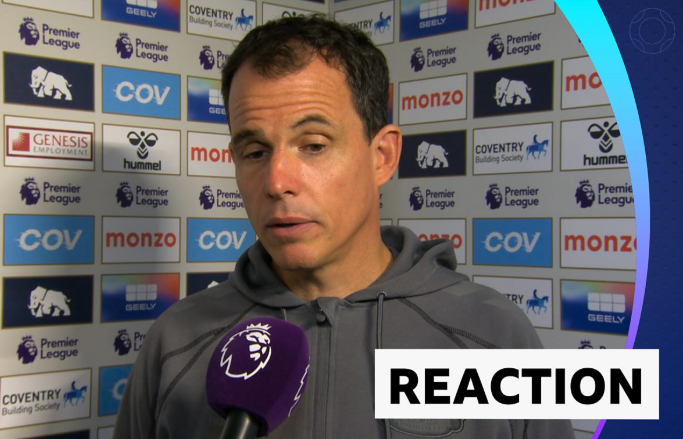
Why Sunderland’s Europa League Dream Is Turning into a Premier League Problem for Regis Le Bris
Sunderland should be celebrating one of the most exciting periods in their recent history. Instead, a club that spent more than 50 years outside European competition is now confronting a serious Premier League survival battle.
Regis Le Bris led Sunderland back to Europe for the first time in 53 years after a remarkable promotion campaign and a seventh-place Premier League finish. Yet this season, the Black Cats sit bottom of the table with just one win and six defeats from nine matches, leaving the Frenchman facing growing scrutiny.
Sunderland host Dinamo Zagreb in the Europa League on Thursday before welcoming Chelsea to the Stadium of Light on Sunday. Those fixtures now feel less like a celebration of their European return and more like a test of whether Le Bris can halt a worrying slide.
A dramatic contrast with last season
At the same stage last season, Sunderland were second in the Premier League after beating Chelsea at Stamford Bridge in their ninth match following promotion. Chemsdine Talbi’s stoppage-time winner secured a 2-1 victory and underlined the confidence and momentum that defined their early return to the top flight.
This campaign has been completely different. Sunderland have taken only five points from nine games, scored seven league goals, and conceded 17. Two of those goals came from penalties, while three arrived in a single match during a 5-3 defeat at Manchester City.
The team have also failed to score in the first half in seven of their nine league fixtures. Red cards have compounded their problems, with Reinildo Mandava, Kevin Danso and Omar Alderete all dismissed in defeats against Arsenal, Bournemouth and Coventry respectively.
Why last season’s success may be misleading
Sunderland were widely praised for exceeding expectations last season, but the underlying numbers suggested their performance level may have been difficult to sustain. Only relegated Burnley and Wolves had a worse expected-goals difference, indicating that Sunderland created fewer high-quality chances than they conceded.
Their defensive organisation was central to their success. Last season, Sunderland allowed the second-lowest expected-goals value per shot faced and recorded a save percentage of almost 72%, helping them concede the fourth-fewest goals despite facing a high volume of attempts.
This season, that defensive structure has deteriorated sharply. Sunderland have moved from allowing the second-lowest xG per shot to the second highest, while their save percentage has fallen to 50%, the lowest in the Premier League.
Is second-season syndrome to blame?
The idea of “second-season syndrome” is often used to explain why promoted teams struggle after an encouraging first year. However, the statistics do not strongly support that theory.
Sunderland and Leeds became the 53rd and 54th promoted clubs to survive their first Premier League season. Of the previous 52 teams to avoid relegation, only 11 went down the following year, a rate of 21%.
With roughly three-quarters of the season still to play, Sunderland have time to recover. But their current form has raised concerns that last season’s overperformance may be catching up with them.
Leadership concerns inside the squad
Captain Granit Xhaka publicly questioned Sunderland’s courage after their 3-1 defeat at Coventry City. The Switzerland midfielder admitted he could not fully identify the problem but said the team needed to show more positivity and bravery.
“I don’t know exactly what the problem is,” Xhaka said. “Is it concentration? Is it other things? We are bottom of the league, but in football you need to think positively and show courage. That is not happening at the moment.”
Former Sunderland defender Nedum Onuoha described Xhaka’s comments as concerning, saying the captain appeared unusually deflated. French football expert Julien Laurens also expressed concern that senior figures such as Xhaka and Nordi Mukiele have fallen well below last season’s standards.
Mukiele had earlier suggested that Sunderland had become arrogant, while Xhaka’s remarks have intensified debate about the mentality within the dressing room.
Has Europe become a distraction?
Sunderland’s return to European football has been one of the few positives of the season. They have won two and drawn one of their first three Europa League league-phase matches, putting them in a strong position in the competition.
However, the additional workload appears to be affecting their domestic form. Sunderland have lost two and drawn one of their three Premier League matches played after European fixtures, collecting just one point from those games.
Laurens believes the Thursday-to-Sunday schedule has reduced Sunderland’s training time and may be particularly challenging for players experiencing European football for the first time. He also suggested that the prospect of travelling to AC Milan in December, while exciting for supporters, could add further pressure on the squad.
Le Bris still has support, for now
Despite the poor results, BBC Sport understands that Le Bris is not in immediate danger of losing his job. Sunderland’s hierarchy is expected to give him time to address the club’s problems, particularly given his success in winning promotion and securing European qualification.
Le Bris has been Sunderland’s manager since July 2024 and is now the club’s longest-serving head coach since Steve Bruce. He has also guided the Black Cats into the Carabao Cup quarter-finals, where they will face Crystal Palace at Selhurst Park.
The former Lorient boss has acknowledged that Sunderland are being exposed by a demanding schedule but insists the club must improve. “We have to play better than we did in the first half,” he said after the Coventry defeat. “We are too inconsistent at the moment to be efficient in this league.”
What Sunderland need next
Sunderland invested £161m in 15 players after winning promotion in the summer of 2025 but spent only £60m on five signings during the most recent window. Retaining Granit Xhaka and Brian Brobbey was seen as a major positive, especially after Brobbey signed a new contract until 2031.
Brobbey scored seven Premier League goals last season and three for the Netherlands at the World Cup, but he has yet to score since returning from a hamstring injury. His return to form could be crucial if Sunderland are to solve their lack of cutting edge.
A positive result against Dinamo Zagreb would lift morale, but Sunderland urgently need a league win against Chelsea on Sunday. Failure to do so would leave them facing an uncomfortable international break at the bottom of the Premier League table.

💬 Comments (0)
No comments yet. Be the first!
Leave a Comment