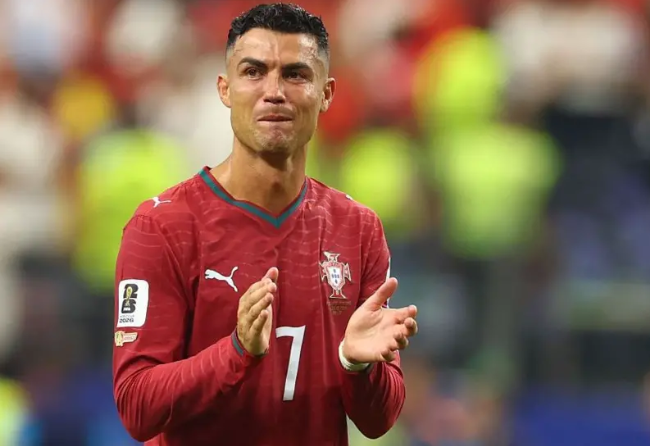
Cristiano Ronaldo’s Bittersweet Portugal Farewell: The Icon Who Changed a Nation
Cristiano Ronaldo has brought his remarkable international career to an end, retiring from Portugal duty after 23 years, 234 appearances and a record 146 goals. Yet the farewell carries a distinctly bitter edge: it follows a dispute with head coach Jorge Jesus and a disciplinary punishment for leaving the national team’s training camp.
A Farewell Without a Send-Off
Ronaldo’s final appearance for Portugal came on September 24, when he started in a 1-0 Nations League win over Wales in Lisbon.
Days later, after being left out of the starting line-up against Norway, the 41-year-old left the camp without permission. The Portuguese Football Federation subsequently imposed a 30-day suspension and a €255 fine, a sanction that had already been served before Ronaldo announced his retirement.
Jesus had indicated that the door remained open for Ronaldo to return, but the forward was no longer guaranteed a starting place. For a player whose entire career has been defined by an uncompromising need to influence matches, that shift appears to have been central to his decision.
From Prodigy to Standard-Setter
Ronaldo’s relationship with Portugal was never simple. As a teenager, he arrived at international camps with a backwards baseball cap, oversized sunglasses and headphones blaring loudly enough to be heard from a distance. His confidence and showmanship did not always sit comfortably with established figures such as Luis Figo and Rui Costa.
Then-coach Luiz Felipe Scolari publicly challenged his attitude but privately told him that maturity could one day make him Portugal captain. That prediction proved prophetic, though the path was marked by conflict as well as growth.
Figo helped Ronaldo settle into the squad, but he did not simply hand over the iconic number 7 shirt. When Figo retired from international football in 2006, Ronaldo inherited both the jersey and, gradually, the responsibility of leading Portugal.
Personal Pain Behind the Persona
In September 2005, before a qualifier in Russia, Scolari and Figo told Ronaldo that his father had died. Ronaldo chose to remain with the squad, asked teammates to carry on normally and coped by practising ball tricks in the dressing room.
He later described Scolari as a father figure. For Ronaldo, the national team became more than a workplace: it was a structure that helped hold his life together during a period of profound personal loss.
Portugal’s Mirror
Sociologist Joao Nuno Coelho has argued that Portugal’s national team became a symbol of the country’s identity and its desire for international recognition. During years of economic difficulty and reduced national confidence, football offered a rare source of pride on the world stage.
Ronaldo stood at the centre of that story. His individualism, ambition and ego divided opinion at home, with some supporters preferring the quieter public images of Figo, Eusebio, Paulo Futre or Rui Costa. Yet even critics recognised that Portugal had produced a global superstar.
As his trophies accumulated, criticism became harder to sustain. Portugal wanted to celebrate him, even when his personality did not always feel easy to embrace.
Euro 2016: The Turning Point
Under Fernando Santos, Ronaldo showed a different side of his leadership. He accepted a more collective role, playing as a centre-forward alongside Nani and embracing the manager’s instructions with unusual willingness.
After Portugal’s opening draw with Iceland, Ronaldo privately told Nani that he trusted Santos. That message helped reshape the dressing room’s perception of him as a captain rather than merely its most famous player.
He was devastated after missing a penalty against Austria, but he channelled the disappointment into leadership. At the training camp in Marcoussis, he took a supporter’s megaphone and reminded fans that Portugal had won nothing yet.
Paris and the First Major Title
In the Euro 2016 final against France, Ronaldo was forced off injured in tears after a muscle problem had already limited his influence throughout the tournament. Nani took the armband, but Ronaldo refused to disappear.
At half-time, he rallied his teammates from the dressing room. Before extra time, still limping, he told Eder that he would score. Eder did exactly that, giving Portugal its first major international trophy.
Even then, Ronaldo’s instinct to control outcomes remained visible. During extra time, he stood in the technical area issuing instructions until the fourth official sent him back to the bench.
A Legacy of Records
Ronaldo’s Portugal career produced achievements that may never be matched. He became the leading men’s international goalscorer and appearance maker, with 146 goals in 234 matches.
He delivered the hat-trick against Switzerland that sent Portugal into the inaugural Nations League final, which Portugal won. In 2025, he lifted a second Nations League title at an age when most elite footballers have long retired.
Under his influence, Portugal evolved from a team of exceptional individuals into a side that expects to compete for major honours. A generation of players entered a dressing room where Ronaldo helped define the professional standard.
Dependence and Debate
After Euro 2016, the debate around Ronaldo changed. Rather than asking whether he was selfish, many began asking whether Portugal had become too reliant on him.
At the 2018 World Cup, he scored a hat-trick against Spain, including a free-kick after 45 unsuccessful attempts at major tournaments, yet Portugal still exited against Uruguay.
Following a difficult 2026 World Cup, questions persisted over his continued role as a starter. But statistically, his period under Roberto Martinez was among his most productive: 28 goals in 37 matches, or 0.756 per game, compared with 0.624 per match under Santos.
A Tribute Still Owed
The Portuguese Football Federation has announced plans for a special tribute to honour Ronaldo’s contribution to the national team.
That recognition is necessary because his ending does not offer supporters the clean, celebratory farewell many would have wanted. Still, Ronaldo did more than score goals for Portugal: he carried the country onto a global stage, set records that may stand for generations and helped reshape what Portuguese football believes it can achieve.
Comments (0)
No comments yet. Be the first!
Leave a Comment