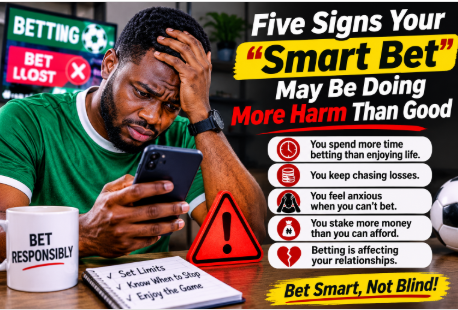
Five Signs Your “Smart Bet” May Be Doing More Harm Than Good
Not every risky wager looks reckless. Some of the most damaging bets arrive dressed in careful analysis, confident language, and a tidy explanation. On the surface, they appear disciplined. Underneath, they may be driven by stress, ego, or the need to feel in control.
The real test of a betting decision is not whether the reasoning sounds impressive. It is what the decision does to your attention, emotions, sleep, and ability to move on afterwards. When a wager starts shaping your mood or consuming your thoughts, the problem is no longer the pick itself, it is the relationship you have with betting.
When Rituals Replace Reasoning
Many bettors develop small habits before placing a wager: a preferred number, a particular time of day, or a routine that feels lucky. On their own, these habits may seem harmless. The danger begins when they start replacing judgement.
Under pressure, the mind naturally seeks certainty. Superstition offers a simple answer where evidence is messy or incomplete. A “lucky number” or repeated ritual can create a false sense of control, making an uncertain outcome feel predictable.
The issue is not the ritual itself. It is when the ritual becomes more important than the reasoning behind the bet.
1: Betting to Change How You Feel
One of the clearest warning signs is using a bet to manage an emotion. A quiet day can start to feel empty without the excitement of a stake. A stressful afternoon can feel easier to face after placing a wager.
At that point, betting stops being entertainment and becomes a coping tool. The mind begins treating the match as a personal test rather than a game. Attention narrows. Every score change feels personal. Every odds movement feels like a message.
A healthy bet ends when the wager is placed. A toxic one lingers, pulling your focus back again and again.
2: Winning Becomes Proof of Intelligence
Another warning sign is when a bet starts protecting your ego. A win feels like confirmation that you are sharp. A loss feels like an attack on your judgement.
That shift changes how you process information. You begin noticing only the details that support your view. Contradictory signs get dismissed as noise, bad luck, or “one-off” events.
Losses also start to feel personal. Instead of accepting them as part of risk, you treat them as problems that must be fixed. The next bet is no longer chosen calmly, it is chosen to repair a feeling.
3: The Story Sounds Better Than the Analysis
A toxic bet often comes wrapped in a compelling narrative. Revenge matches. Unstoppable momentum. Perfect timing. Destiny. “This team can’t lose today.”
Narrative is attractive because it gives meaning to uncertainty. Process is less exciting because it demands patience and accepts that outcomes cannot be controlled.
But sport does not reward good storytelling. It rewards preparation, discipline, and the ability to accept uncertainty. When a bet is built on drama rather than fundamentals, small coincidences start feeling like proof. The decision loses its grounding.
4: The Stake Is Doing Emotional Work
Stake size is often where trouble becomes visible. A bet can still sound rational while the amount behind it is driven by emotion.
Common patterns include:
- Increasing the stake after a loss to “get back to even”
- Using one bet to rescue a bad week or prove a point
- Betting more when tired, angry, or bored
- Feeling that small stakes are pointless because they don’t create a rush
- Hiding the real amount from a budget or from people close to you
A healthy stake matches a budget and a plan. A toxic stake matches a mood. If the amount is chosen to create a feeling rather than reflect a plan, the decision is already unstable.
5: Life Starts Revolving Around One Result
The clearest sign is when daily life begins to shrink around a single outcome. Plans get postponed. Sleep becomes lighter. Phone checks become constant. Conversations keep returning to the same topic.
A healthy bet does not need constant monitoring. Frequent checking is often anxiety dressed up as involvement. The mind rehearses both victory and disaster, then repeats the cycle. That loop is exhausting and builds dependence on relief.
A Simple Test: The Aftertaste
The easiest way to judge a bet is by how it feels afterwards. A healthy bet ends with “done.” A toxic one keeps demanding attention.
A few practical checks can help:
- A clear budget exists, and the stake never breaks it
- The bet is not being used to repair mood, confidence, or identity
- Sleep and daily routines remain protected, win or lose
- The reasoning includes downside risk, not only supportive arguments
- Time spent thinking about the bet stays limited and intentional
If these checks fail, the bet may still look clever. The behaviour around it is what makes it harmful.
Calm Decisions Beat Loud Confidence
The most dangerous bets are not always the obvious ones. They are the ones that use strategy language and confident logic while quietly slipping into ego, narrative, and emotional stake sizing.
A strong approach is often boring in the best way: clear limits, honest motives, and the ability to walk away. A decision that protects your daily life is smarter than one that wins once and steals the rest of your week.
Conclusion
A bet does not have to look reckless to be harmful. The real danger often lies in the behaviour around it, mood-driven stakes, ego protection, narrative thinking, and life disruption. Recognising these patterns early is the first step towards keeping betting controlled and sustainable.

Comments (0)
No comments yet. Be the first!
Leave a Comment